SDLR
Space Debris Laser Ranging Station
2027
Project specifications
Main Scope
Space Debris Laser Ranging Station
Developed by
CASTORE Consortium (Microgate, ADS International, LEOS, AstroSysteme Austria, Lumi Space) – Support of INAF-Osservatorio Astrofisico di Arcetri and INAF-Osservatorio Astronomico di Roma
Project completion
2027
Telescope class
1 m
Ranging laser
1064nm, 150mJ, 1ns, 200Hz
Adaptive secondary mirror diameter
0.31 m
Number of actuators
84
Actuator spacing
28 mm
Laser Guide Star
589 nm sodium laser
Laser technology
All lasers developed and manufactured in Italy
Additional capabilities
Uplink correction of the ranging laser, Compatibility with momentum transfer and QKD, Advanced time-of-flight ranging sensor based on MPD single photon detectors
Structure size


National Base Space Center "Giuseppe Colombo"

ASI – Agenzia Spaziale Italiana
SDLR
Space Debris Laser Ranging Station
Status:
Procurement, manufacturing and modular testing
Lorem ipsum dolor sit amet, consectetur adipiscing elit, sed do eiusmod tempor incididunt ut labore et dolore magna aliqua. Lorem ipsum dolor sit amet, consectetur adipiscing elit, sed do eiusmod tempor incididunt ut labore et dolore magna aliqua.
Description
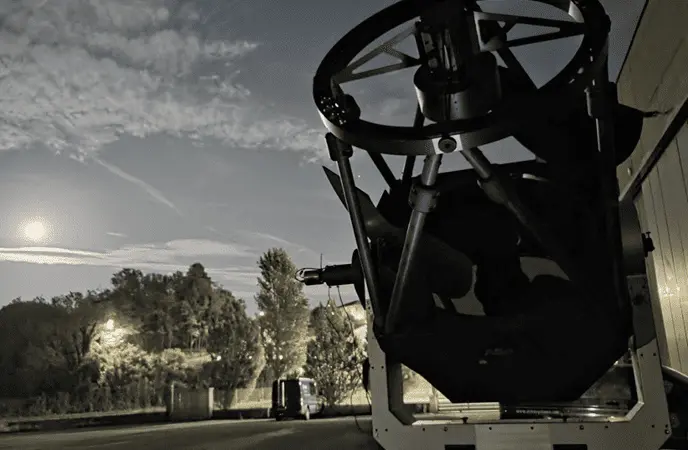
The ASI SDLR project focuses on the development of an advanced Space Debris Laser Ranging station equipped with state-of-the-art adaptive optics technology. The facility will be installed at the Italian Space Agency’s Space Geodesy Center “Giuseppe Colombo” in Matera and will operate with a 1-meter class telescope dedicated to high-precision tracking and characterization of space debris.
The ranging system is based on a 1064nm pulsed laser running at up to 200Hz, allowing accurate measurement of the space debris distance, and thus accurate orbit reconstruction. The time-of-flight sensing system relies on an advanced optical sensor based on an array of Near-Infrared Single Photon Avalanche Diodes (SPADs) supplied by Micro Photon Devices XXXlink.
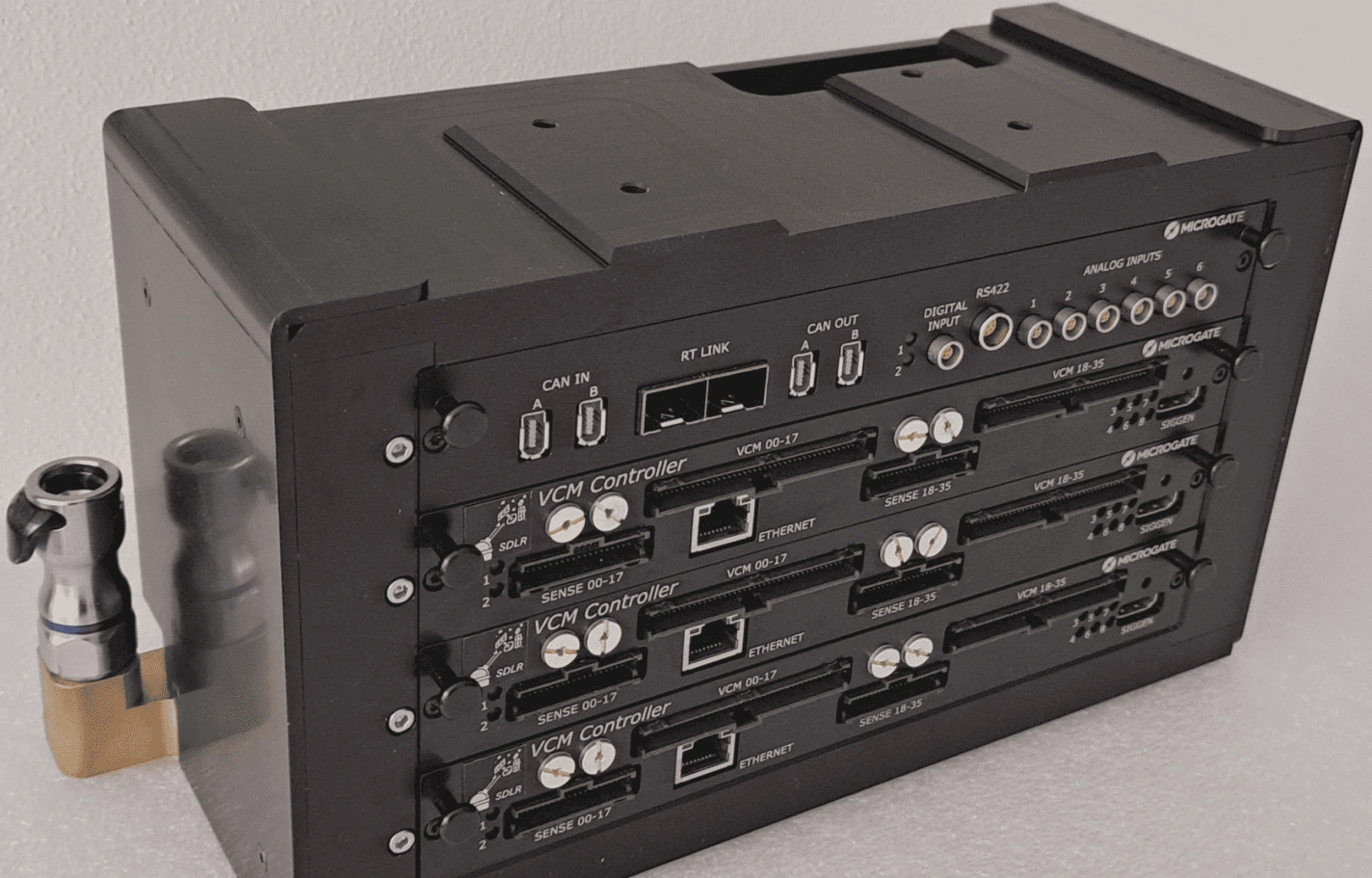
At the core of the system is Microgate’s 0.31-meter adaptive secondary mirror, equipped with 84 actuators for real-time wavefront correction. To further improve the adaptive optics correction, the observatory will employ a Laser Guide Star (LGS) operating at 589 nm, generated within the mesospheric sodium layer to compensate for atmospheric turbulence during debris observation and laser ranging activities.
The project combines adaptive optics, laser technologies, and precision control systems to support next-generation space surveillance and tracking capabilities.
microgate responsibilities
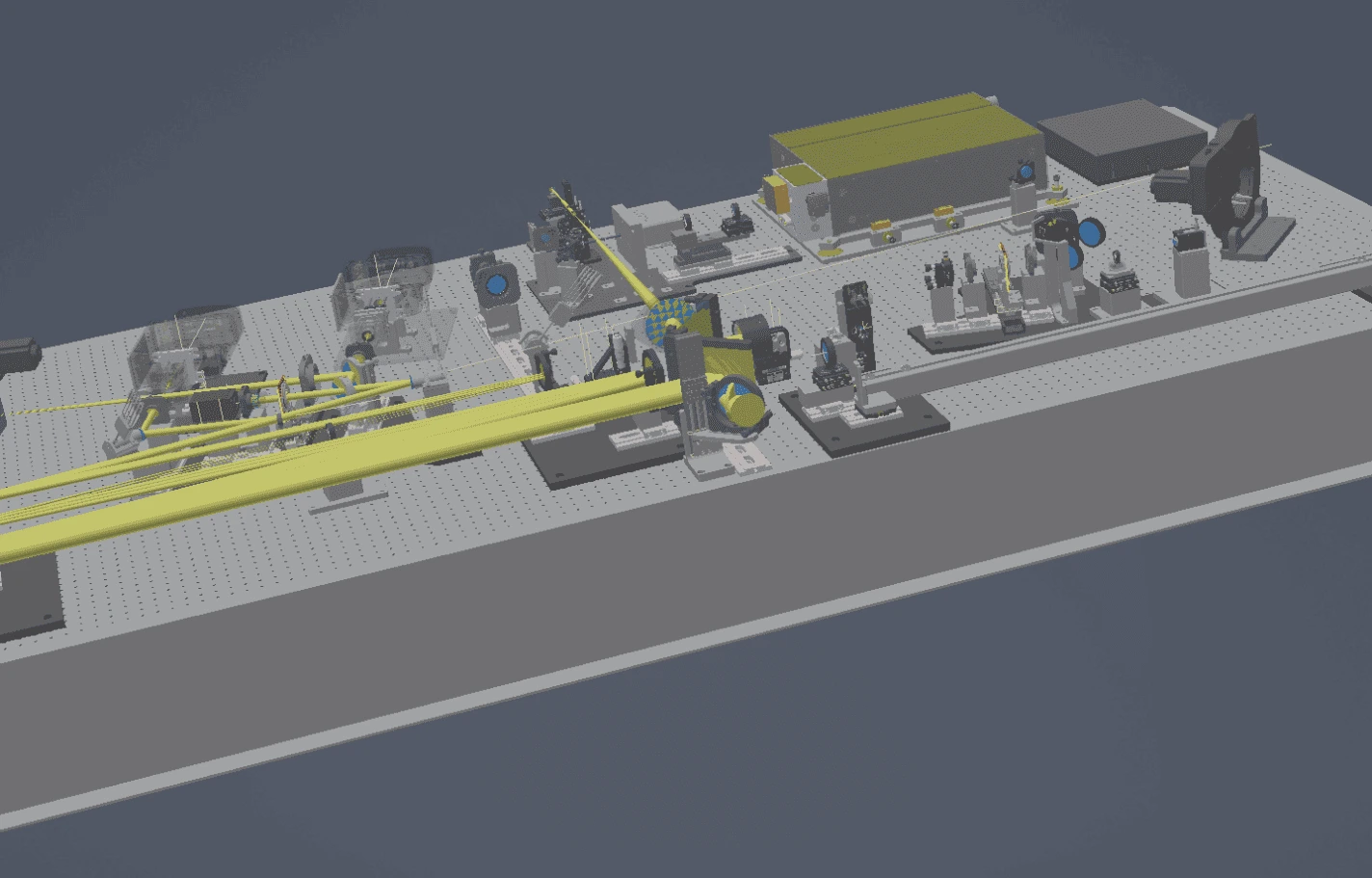
As consortium leader, Microgate is responsible for project management, system engineering, and quality and safety assurance. Our activities include the design, implementation, and testing of the adaptive optics control system, development of the real-time control system software, and optical system design.
Microgate also coordinates construction activities through dedicated suppliers and provides on-site integration, commissioning, and testing support for the complete facility.