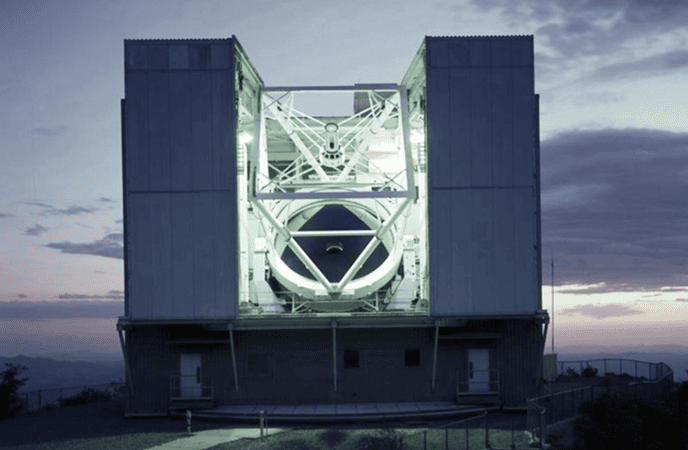
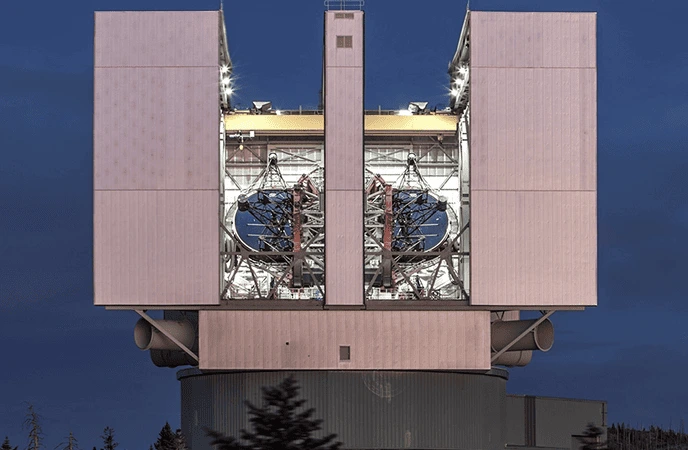
Research and innovation in Adaptive Optics
Driving the future of astronomy
Pioneering Adaptive Optics for Modern Astronomy
Redefining optical correction for modern telescopes
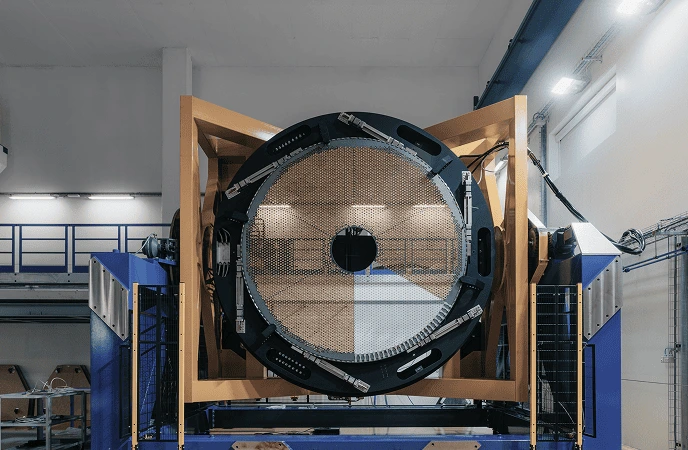
Introduced in 1993 by Pietro Salinari at the Arcetri Astrophysical Observatory and industrialized through the collaboration with Roberto Biasi, Microgate’s Founder and CTO, the adaptive secondary mirror has become a cornerstone technology for optical correction in modern astronomical telescopes.
Since then, Microgate has been at the forefront of its development, designing and delivering state-of-the-art control electronics, now in their fifth generation. In partnership with ADS International, and with the scientific support of INAF and Politecnico di Milano, Microgate provides complete adaptive mirror systems that continue to set new benchmarks in astronomical instrumentation and high-precision optics.



From design to performance
The engineering behind Adaptive Secondary Mirrors.
Adaptive Secondary Mirrors enable ground-based telescopes to counteract the blurring effects of Earth’s atmosphere. By reshaping the mirror surface thousands of times per second, these systems restore image sharpness to a level comparable to that of space telescopes — while preserving the much larger apertures achievable from the ground.
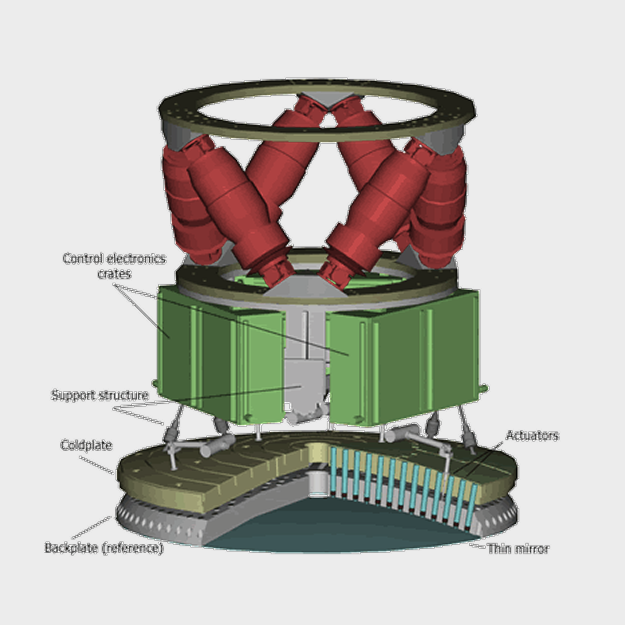
System architecture

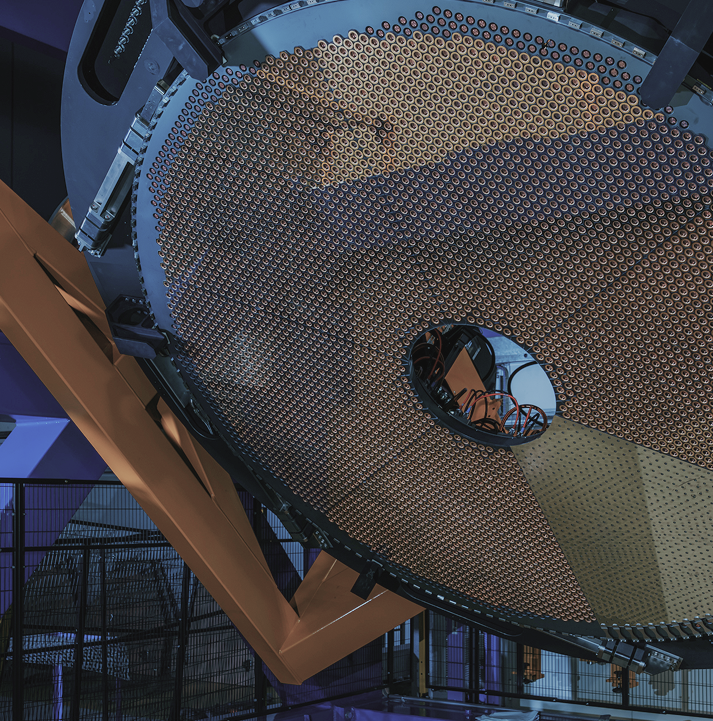
Microgate’s adaptive secondary mirrors are built around an ultra-thin mirror shell, typically less than 2 mm thick, designed to flex rapidly without mechanical stress. A rigid, thermally stable reference structure ensures long-term positional accuracy, while a dedicated cold plate supports the actuators and provides efficient thermal control. Integrated metrology continuously monitors mirror deformation with nanometer-level precision, guaranteeing stability and repeatability.
Electromagnetic actuators
Mirror shaping is achieved through thousands of contactless voice-coil actuators that apply controlled magnetic forces directly to the mirror shell. This friction-free architecture eliminates hysteresis and wear, enabling smooth, precise, and highly repeatable motion. Ultra-fast control electronics enables real-time corrections that compensate for atmospheric turbulence and deliver space-like image quality from the ground
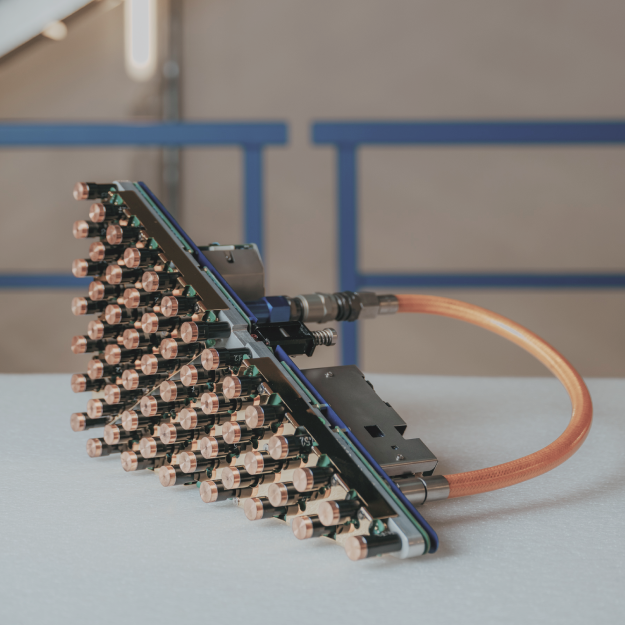

CONTACTLESS ADAPTIVE MIRRORS FACTS
Our Engineering Toolkit
TRL 9
Fully validated technology, with operational deployment in large telescopes such as ESO’s VLT since 2016.
Number of Actuators
From a few dozen up to 5,000 and more, depending on application.
Actuator pitch
Typically between 25 and 40 mm, with proven developments down to 16 mm.
Stroke capability
In excess of 100 µm, assuring field stabilization, compensation of quasi-static aberrations and adaptive optics correction on a single mirror
Settling time
Less than 1 ms for any controlled mode, enabling ultra-fast response.
Command bandwidth
Larger than 1.5 kHz, guaranteeing rapid and accurate control.
Disturbance rejection bandwidth
Larger than 400 Hz, providing immunity against external disturbances
Thermal stability
Better than 1 nm/K without AO loop, ensuring reliable performance under varying conditions.
Absolute positioning accuracy
Below 20 nm RMS, delivering nanometer-level precision.
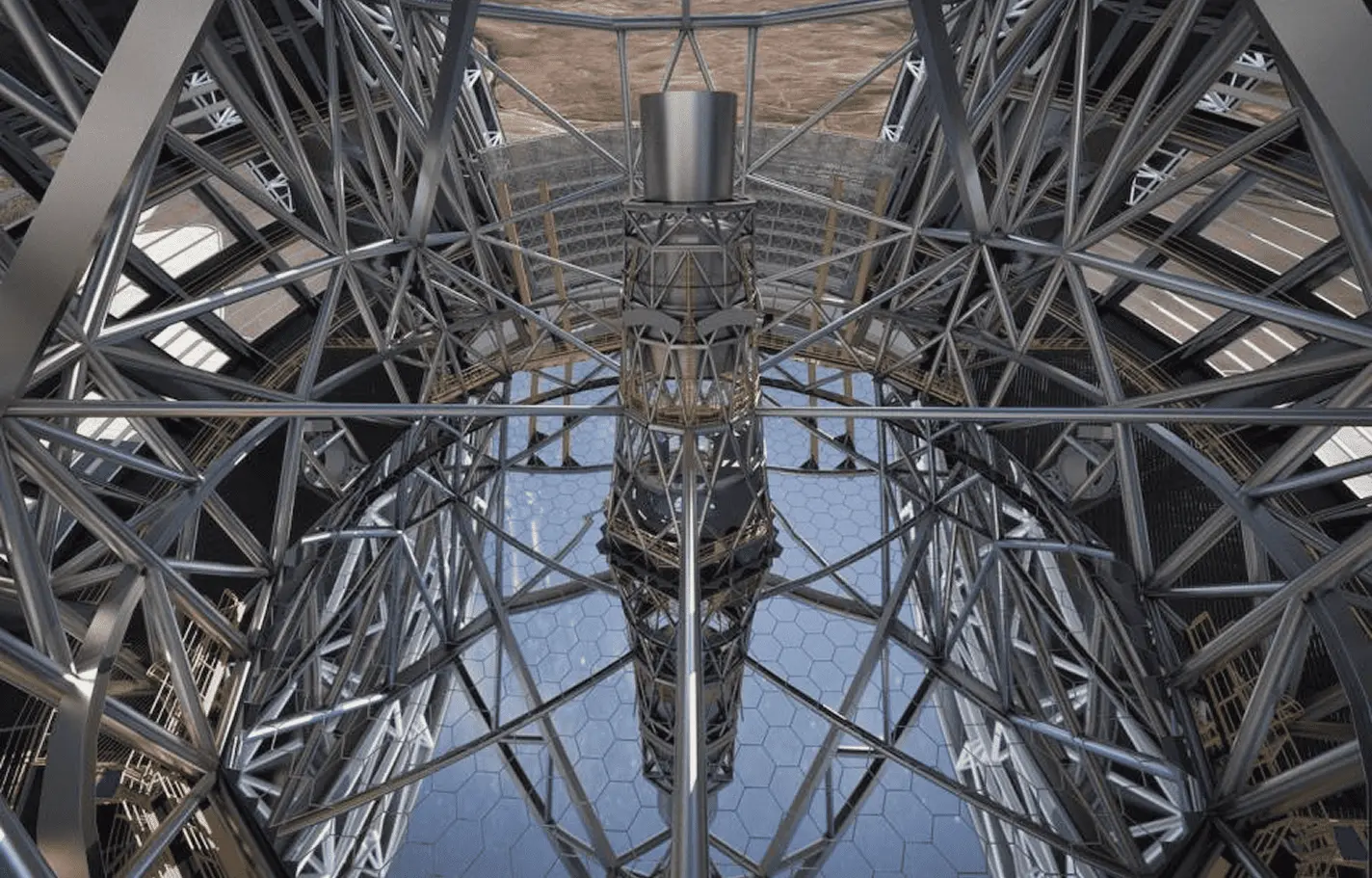


ENGINEERING PROJECTS
Explore Our Adaptive Optics Projects
Explore the milestones that have defined Microgate's journey in Adaptive Optics. From pioneering adaptive secondary mirrors to the next generation of giant telescopes, each project represents a step forward in precision engineering, real-time control and optical innovation, developed alongside the world's leading observatories and research institutions.