Gait analysis
Measuring gait to guide rehabilitation
Rehabilitation
Introduction




Examples of configurations:
flexible and customizable
Objectively assessing gait is the starting point for guiding rehabilitation and monitoring progress. It is valuable to analyse spatiotemporal parameters, asymmetries and trunk compensations both under natural conditions and on a
treadmill, from baseline to fall prevention assessment.
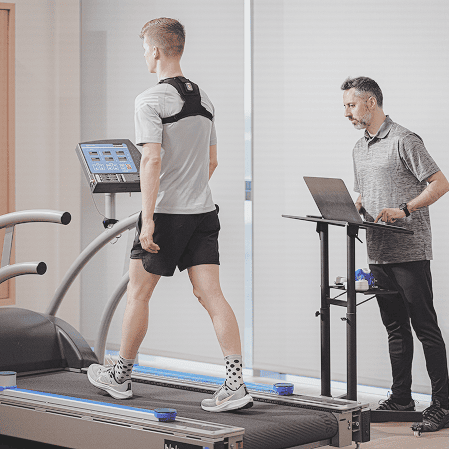
Configuration 1
Defining the baseline
Spatiotemporal analysis of gait at spontaneous speed to establish an initial reference. OptoGait measures cadence, step length, contact times and symmetry, providing objective, repeatable and temporally comparable data. This represents the starting point for monitoring recovery evolution and guiding clinical decisions.
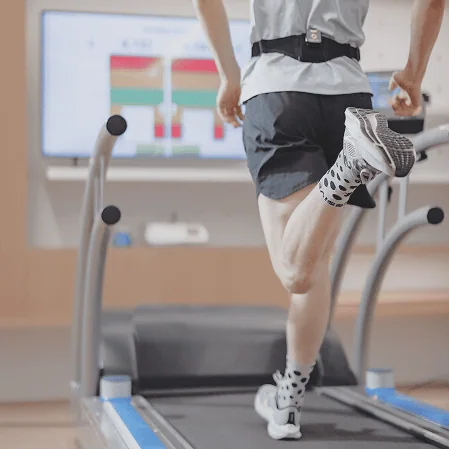
Configuration 2
Assessing gait at different speeds
Gait analysis at controlled speeds (slow, spontaneous, fast) to observe how spatiotemporal parameters vary as demands increase. Variations in symmetry, stability and contact times allow identifying deficits that emerge only at higher speeds, providing useful indications for load progression and return to dynamic activities.
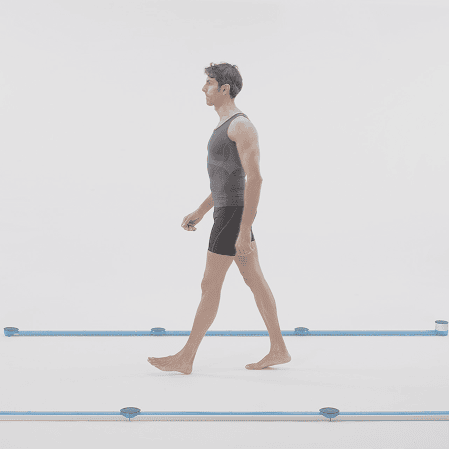
Configuration 3
Comparing treadmill and overground walking
Gait assessment under different conditions to analyse adaptations and motor strategies.
The treadmill allows controlled and repeatable conditions, while overground walking introduces variability and more ecological demands. Comparing the two contexts highlights differences in coordination, stability and step management, improving the quality of functional assessment.
Products suited
for this field of application
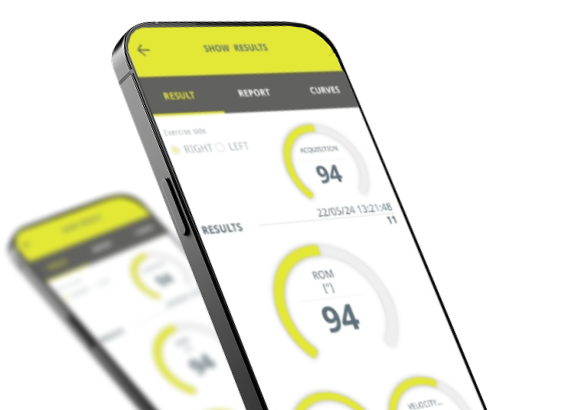
Optogait allows rapid and non-invasive gait analysis, on a treadmill or on the ground, without the need for complex laboratories. Integrated with GykoPro, it extends assessment to trunk compensations and postural alignment, offering a complete functional picture applicable in various clinical contexts.