Tempi di reazione
Reactivity and readiness on the recovery pathway
Rehabilitation
Introduction




Examples of configurations:
flexible and customizable
Recovering reactivity after an injury or in the presence of neurological deficits means working on the entire neuromuscular chain, from stimulus perception to motor response. It is useful to progressively train and monitor reaction times, combining cognitive stimuli and motor tasks.
Contact Us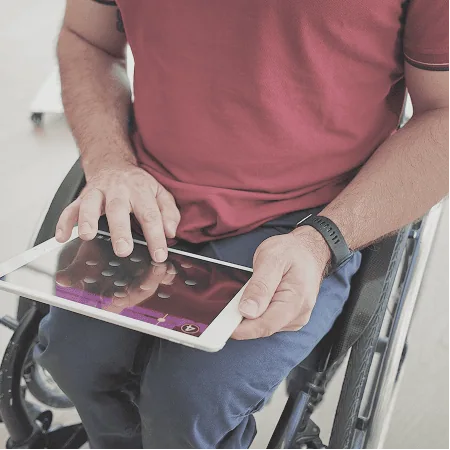
Configuration 1
Training response speed
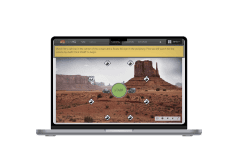
Adaptive exercises with BrainHQ targeting selective attention, processing speed and working memory.
Particularly indicated for patients with neurological conditions, head trauma outcomes or cognitive decline, where response slowness often represents the main deficit. Protocols adapt to the patient's level and monitor their progress over time.
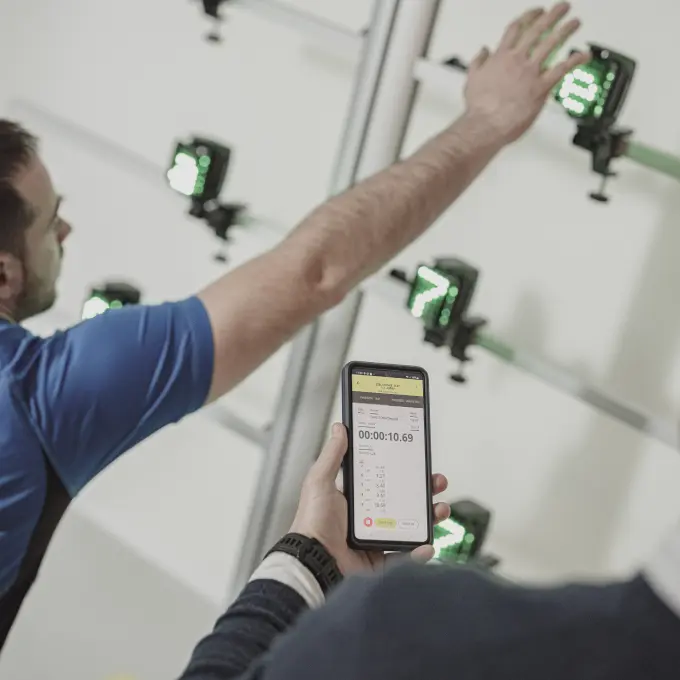
Configuration 2
Integrating decision and movement
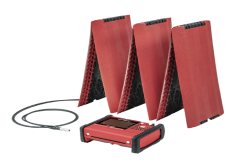
With WittyPro SEM, visual or numerical stimuli of increasing difficulty are paired with motor responses. The system records response times and precision, allowing reactivity assessment in dynamic contexts. A particularly useful approach in the advanced Return to Play phase, to rebuild decision readiness under conditions increasingly similar to competition.
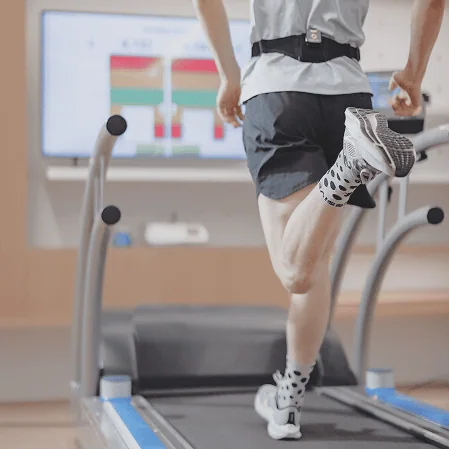
Configuration 3
Applying reactivity in functional contexts.
Tests with visual or auditory stimulus during walking or treadmill running. OptoGait records variations in spatiotemporal parameters in response to the stimulus, assessing how reactivity integrates with movement control.
Products suited
for this field of application
BrainHQ trains the main cognitive functions with validated adaptive protocols. WittyPro SEM allows developing progressive and customisable cognitive-motor exercises. OptoGait integrates the physical and reactive component, objectively measuring the impact of stimuli on movement parameters.