Joint mobility
Recovering ROM, measuring progress
Rehabilitation
Introduction




Examples of configurations:
flexible and customizable
Recovering reactivity after an injury or in the presence of neurological deficits means working on the entire neuromuscular chain, from stimulus perception to motor response. Here are some proposals for progressively training and monitoring reaction times, combining cognitive stimuli and motor tasks.
Contact Us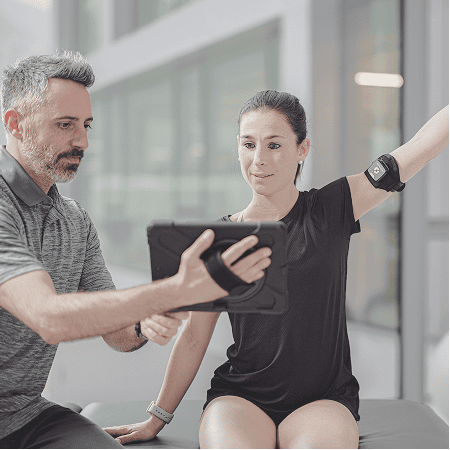
Configuration 1
Shoulder: mobility and control in overhead movement
Assessment of flexion, abduction and internal and external rotations to monitor recovery after rotator cuff
injuries, instability or surgery. GykoPro objectively measures angles, speed and symmetries, supporting progression from passive to active-resisted work and guiding return to overhead activities.
Configuration 2
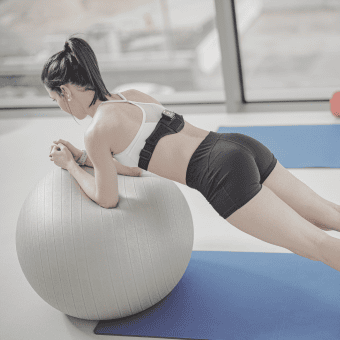
Hip: mobility and pelvic stability
Tests of hip flexion, extension, abduction and rotations to assess recovery after muscle injuries, surgery or joint pathologies. Hip functionality is central to posture, pelvic stability and force transmission to the lower limbs. GykoPro monitors angles and movement fluidity, supporting progressive mobilisation protocols.
Configuration 3
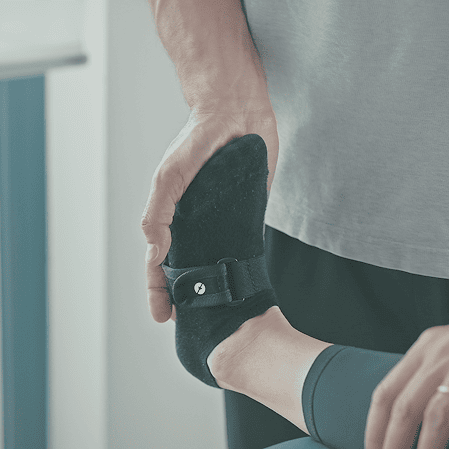
Ankle: functional mobility and relapse prevention
Assessment of dorsiflexion, plantarflexion, inversion and eversion to monitor recovery after sprains, fractures or
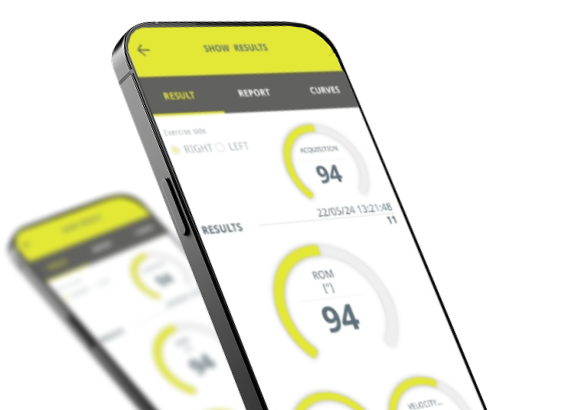
surgery. Dorsiflexion is a key parameter for movement quality in running and jumping and for relapse prevention. GykoPro records ROM, speed and segmental control,
detecting asymmetries and guiding therapeutic progression.
Products suited
for this field of application
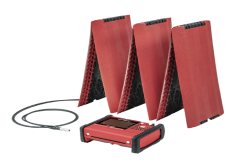
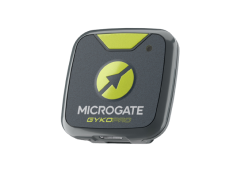
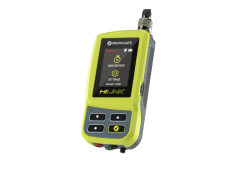
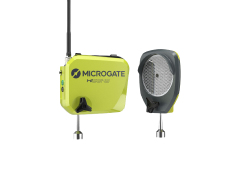
GykoPro is a portable inertial system that measures ROM, speed and fluidity of movement in any joint. Easy to position on all body segments, it provides objective data to monitor progress, document the rehabilitative pathway and support evidence-based clinical decisions.