Jumps
Objective criteria for Return to Play
Rehabilitation
Introduction




Examples of configurations:
flexible and customizable
Jump analysis provides objective criteria for assessing strength, symmetry and control on the pathway towards return to play. Tests allow measuring the Limb Symmetry Index, the Reactive Strength Index and landing quality through single-leg and multidirectional tests, supporting evidence-based clinical decisions.
Contact Us
Configuration 1
Assessing symmetry: Limb Symmetry Index (LSI) and neuromuscular control
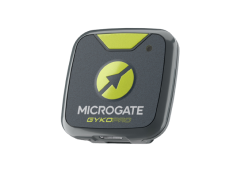
Single Leg CMJ and Hop Test allow quantifying limb symmetry through the LSI. Optogait precisely measures flight and contact times, while GykoPro analyses the eccentric and concentric phases of the jump, providing objective criteria to guide progression and safe return.

Configuration 2
Analysing reactivity: Reactive Strength Index (RSI) and landing quality
Drop Jump and single-leg reactive jumps allow assessing the RSI and load absorption capacity.
Optogait's synchronised video analysis allows identifying any landing compensations, while GykoPro integrates information on segmental accelerations and trunk control.

Configuration 3
Integrating strength and stability: single-leg horizontal jump
The single-leg broad jump allows assessing horizontal force and stabilisation capacity. The integration
between Optogait and GykoPro allows measuring distance, LSI and limb-specific stabilisation indices, offering a complete and reproducible functional assessment.
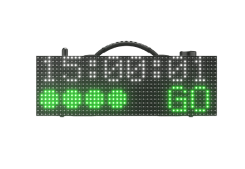
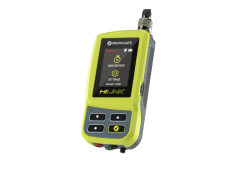
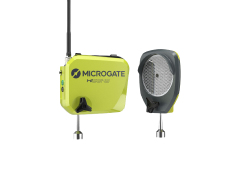
Products suited for this field of application
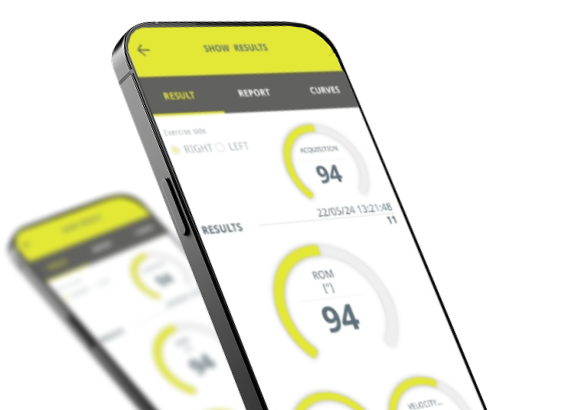
Optogait measures flight times, contact times and RSI with high precision, supporting symmetry analysis and synchronised video analysis. GykoPro integrates the assessment with data on eccentric-concentric phases, strength, speed and power, providing a complete picture for safe clinical decisions.